
The Anatomy of Complex Event Logistics
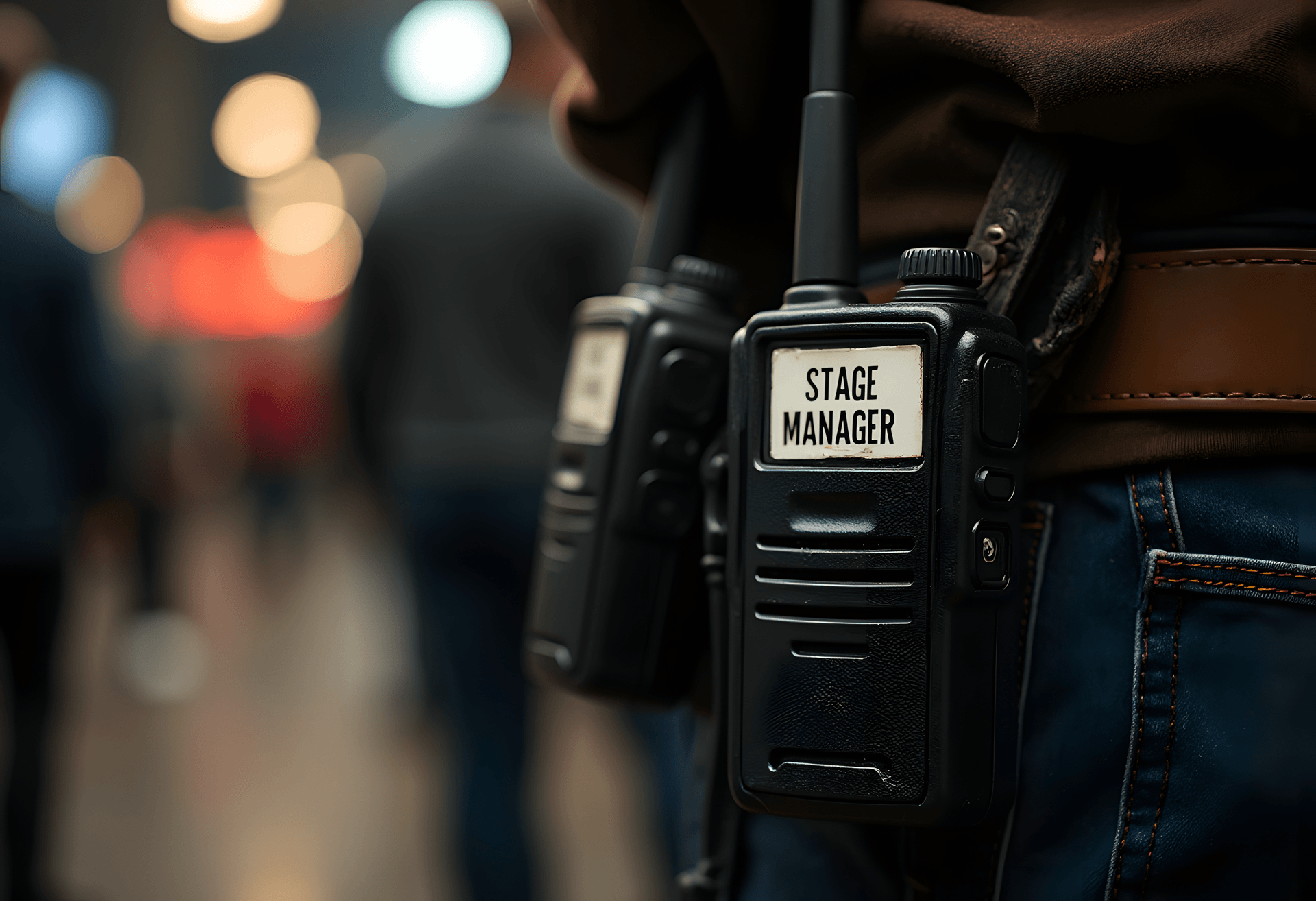
What High-Stakes Execution Demands—Beyond Visibility
From the outside, high-level events appear effortless.
That perception is not accidental—it is engineered through operational control.
Behind every seamless experience is a multi-layered system of logistics, decision-making, and real-time coordination that most organizations underestimate—and under-resource.
Logistics Is Not a Function—It Is the System
In complex environments, logistics is not a downstream phase.
It is the infrastructure of brand execution.
True full-cycle event management integrates:
Brand management and positioning
Operational architecture
Financial stewardship
Guest experience design
Risk, compliance, and contingency systems
Not as parallel tracks—but as a single, controlled operating model.
Fragmentation is where failure begins.
Execution Is a Series of Interdependencies
Complex events are not linear.
They are interdependent systems—where a delay, gap, or misalignment in one area cascades across the entire experience.
This is where business acumen—not just coordination—becomes the differentiator.
The Core Layers of High-Stakes Event Logistics
1. Venue + Infrastructure (Control of Environment)
Strategic event venue sourcing is not about availability—it is about control.
It determines:
Movement flow and density management
Security integration and access control
Spatial alignment with brand positioning
Infrastructure scalability under pressure
All reinforced through negotiation and contracting that protect both flexibility and leverage.
A venue is not a backdrop.
It is an operational asset.
2. Transportation + Movement (Control of Time)
Movement is where execution fractures first.
Coordinating luxury and chauffeured ground transportation is not logistical—it is temporal control.
Arrival sequencing impacts perception
Delays disrupt programming integrity
Poor routing compounds across schedules
For executives, partners, and VIPs, friction here does not go unnoticed—it redefines the entire experience.
3. Guest Experience (Control of Perception)
Experience is not hospitality—it is managed perception at scale.
High-performance environments require:
Embedded event concierge and hospitality systems
Personalized guest handling protocols
Seamless transitions across all touchpoints
This is where brand management becomes tangible.
And where brand affinity is either built—or permanently lost.
4. Compliance + Risk (Control of Exposure)
Overlooked by many. Non-negotiable in reality.
Compliance, permitting, and risk/contingency planning ensure:
Regulatory adherence across jurisdictions
Safety systems and escalation protocols
Pre-engineered contingency responses
Failure here is not an inconvenience.
It is a liability event.
5. Financial Stewardship (Control of Outcome)
Without disciplined event accounting and financial stewardship, complexity turns into cost leakage.
Precision enables:
Real-time budget control
Strategic reallocation under pressure
Clear attribution of ROI
Financial control is not back-office.
It is decision power in motion.
Lead Time Is an Operational Advantage
Complex execution requires time as a strategic input.
Insufficient lead time compromises:
Vendor quality and alignment
Negotiation leverage
Infrastructure readiness
Data and reporting frameworks
Global-scale activations—such as the FIFA World Cup—are not executed quickly.
They are engineered over years to ensure continuity, scale, and measurable return.
Short timelines don’t create efficiency.
They introduce systemic risk.
Where Organizations Lose Control
Execution breakdowns are rarely dramatic—they are incremental.
Logistics treated as coordination instead of strategy
Vendors treated as interchangeable instead of integrated
Timelines compressed beyond viability
Decision-making disconnected from financial visibility
Individually manageable.
Collectively destabilizing.
What Controlled Execution Actually Looks Like
When logistics is engineered correctly, it disappears.
What remains is:
Precision without friction
Movement without disruption
Experience without gaps
Brand alignment without inconsistency
This is not overperformance.
It is operational discipline executed at scale.
The Bottom Line
Complex events do not fail from lack of vision.
They fail from lack of systemization, control, and execution integrity.
The difference between volatility and consistency is not creativity.
It is infrastructure.
If your event execution depends on coordination rather than control, gaps are inevitable.
BELM architects full-cycle operational systems—integrating logistics, experience, and financial oversight into one disciplined model.